
Modern smart product design demands continuous innovation and structural refinement. You can replace traditional mechanical switches with solid-state capacitive touch buttons to elevate overall hardware aesthetics. Implementing advanced capacitive touch-sensing technology creates gapless surface overlays while eliminating physical wear and mechanical fatigue. Integrated capacitive proximity sensors wake device controls upon hand approach, optimizing power efficiency. Goodkey drives solid-state interface innovation by delivering high reliability across demanding operational environments. Upgrading to capacitive touch reduces system costs and simplifies overall manufacturing. You provide a personalized user experience with long-term operational reliability. Ultimately, adopting a modern capacitive touch user interface gives engineering teams unmatched architectural freedom.
Key Takeaways
-
Capacitive touch buttons eliminate physical gaps, creating smooth and modern product surfaces.
-
Solid-state sensors remove moving parts, preventing mechanical wear and extending product life.
-
Sealed continuous overlays block water and dust, protecting internal electronics in harsh environments.
-
Proximity sensors and haptic feedback deliver an interactive and battery-efficient user experience.
-
Single-chip microcontrollers reduce system assembly costs while simplifying the overall circuit design.
Elevating Aesthetics with Capacitive Touch
Seamless Integration Across Modern Overlays
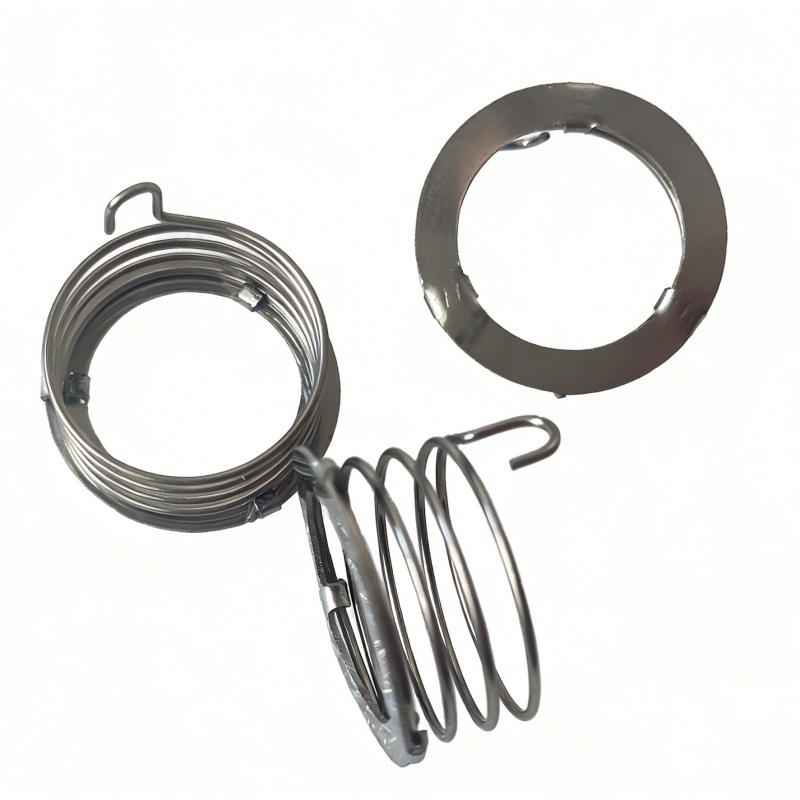
You can create seamless product surfaces using capacitive touch technology. Mechanical buttons require physical cutouts in outer housings. You avoid these gaps by placing solid-state sensors directly behind smooth outer panels. A modern smart keyless lock uses glass or plastic overlays to protect internal circuits. Recommended non-conductive overlays range from 1 to 3 mm in thickness. You can tune system parameters to detect input through 6 mm glass panels on a heavy commercial door. This clean layout design upgrades visual aesthetics while preserving structural strength.
Flexible printed sensors conform easily to curved housing surfaces. You can apply non-conductive adhesives like 3M 200MP or 467MP to bond cover materials without creating signal-blocking air gaps. A high-durability door handle benefits from flexible polymer foils made of PET. These flexible layers provide huge design flexibility for modern residential access hardware. Building a keyless door panel avoids flat metal plates. You maintain tight outdoor security while achieving a sleeker design across every exterior surface. Integrating a custom PCB touch spring maintains steady electrical contact against deep enclosure walls.
Backlit Interfaces and Compact Footprints
Compact sensor layouts save valuable internal space inside slender product housings. Goodkey touch solutions combine sensing elements and illumination into unified modules as small as a 15 mm square footprint. You can place illuminated icons directly beneath glass overlays without expanding your board footprint. Deadfront printing keeps symbols hidden until a user approaches the device. This hidden interface lights up instantly during user interactions. You get a sleeker design that improves overall product design and enhances capacitive sensing applications.
Integrating backlighting into compact touch zones simplifies your overall enclosure assembly. You can mount a capacitive sensor switch spring behind a solid plastic shell to establish reliable grounding. Modern device designers use this space-saving construction to build slim access control panels. You protect internal electronics while giving users immediate visual feedback. This high level of design flexibility transforms a basic security door panel into an intuitive control hub. Hardware engineers deliver refined smart hardware without sacrificing operational reliability.
Improving Durability Over Mechanical Controls
Eliminating Mechanical Wear and Tear
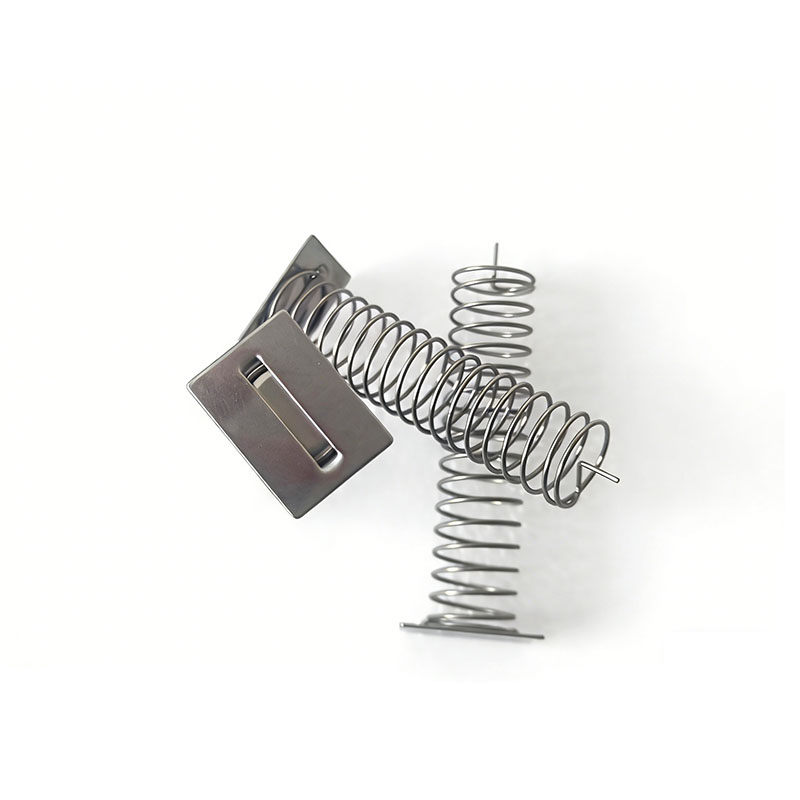
Traditional mechanical push buttons wear out quickly in continuous-use entry points. Physical moving parts experience microscopic wear during every single activation cycle. Metal dome assemblies carry a published IEC 60947-5-1 budget of 1M to 10M operations. High-use commercial entry panels exhaust this physical operational allowance in two to four years. Each physical press causes micro-wear on contacts and return mechanisms. This accumulated wear creates recurring maintenance issues in high-cycle applications such as elevators, production lines, and public kiosks. Replacing legacy switches with solid-state capacitive touch buttons eliminates mechanical contact failure modes completely. You can place a conductive capacitive sensor switch spring behind a solid exterior panel to maintain solid electrical contact without open key holes. Solid-state capacitive touch controls feature no physical moving parts. Industrial capacitive touch sensors achieve 5,000,000+ cycles, while automotive implementations deliver practically unlimited actuation cycles across a 10 to 15 year vehicle service life. Eliminating mechanical fatigue yields greater reliability for modern smart door locks. You protect delicate internal electronics while offering strong authentication across high-traffic access areas. Solid-state design lowers maintenance costs for every installed security door system.
|
Lifecycle measure |
Solid-state touch controls |
Mechanical push buttons |
|---|---|---|
|
Industrial rated cycles |
5,000,000+ cycles |
High-cycle use often fails within 12–24 months |
|
Typical rated actuation cycles |
Practically unlimited in automotive use |
100,000–1,000,000 cycles depending on switch type |
|
Failure driver |
No moving parts; lifetime limited by controller MTBF |
Metal-dome assemblies carry an IEC 60947-5-1 budget of 1M–10M operations |
|
Service life implications |
Outlasts a 10–15 year vehicle service life without failure |
Microscopic wear creates accumulated failure risk over time |
|
Operation through overlays |
Functional through overlays up to 10 mm |
Requires physical cutouts and key holes |
Sealed Enclosures for Ingress Protection
Continuous surface overlays protect internal circuit boards from environmental damage in demanding operational settings. Mechanical door controls require physical key holes in outer housings. Moisture, fine dust particles, and corrosive chemicals enter these openings over time. A solid solid-state touch interface creates a complete continuous physical barrier. You can build a robust keyless door access control panel using solid non-conductive cover materials. Standard sealed front-face chassis designs achieve an IP65 rating. This rating blocks airborne dust particles completely while resisting direct water jets from any direction. Adding a full-perimeter gasket along a final bonded assembly achieves an IP67 rating for full submersibility protection. Specialized full-stack designs even pass intensive IP69K washdown testing under severe high-pressure washdown conditions.
A dedicated security door panel using Grade 304 or Grade 316L stainless steel resists harsh cleaning chemicals, salt water spray, and aggressive acidic vapors. Optical bonding fills internal air gaps between cover glass and sensing layers. This optical bonding process stops liquid ingress and moisture accumulation inside the main door assembly. You ensure continuous access control operation on every exterior security door. A modern smart keyless lock maintains strict residential security behind a fully sealed front bezel. Eliminating key holes simplifies daily exterior cleaning routines while preventing seal delamination over time. You deliver reliable, uninterrupted door access performance in harsh outdoor weather conditions without risking internal electrical shorts. Solid-state sensor construction ensures high overall security and reliable user entry control across every commercial installation.
Enhancing UX Across Capacitive Touch Screens and Buttons
Proximity Sensing and Auto-Wake Functionality
Capacitive proximity sensors enable automatic wake capabilities on a smart keyless lock. Printed circuit board sensing traces detect an approaching human hand within a typical range of 5–300 mm. Controller hardware using Atmel QTouch technology reliably detects hand movement up to 200 mm away from housing cover panels. You can program the system microcontroller to keep bright display components in low-power sleep modes until physical approach. Electric field sensing algorithms distinguish real approach gestures from environmental noise, moisture shifts, and ambient temperature changes. Proximity detection instantly powers up backlit keypads, dynamic menus, and illuminated status symbols. This auto-wake functionality optimizes total power usage while preserving continuous exterior security access for every person. Placing a custom PCB touch spring behind non-conductive cover materials maintains stable baseline capacitance against deep enclosure walls. You offer seamless interaction while extending total battery operating life on modern door hardware projects.
Capacitive touch screens remove the physical clutter of mechanical buttons and create a cleaner, more enjoyable user experience.
Low-Latency Gestures and Haptic Feedback
Combining solid-state input controls with touch screens harmonizes user interactions across smart door hardware. High-frequency sensor sampling delivers low-latency responsiveness across modern capacitive touch screens. Controller chips calculate capacitance changes across mutual-capacitance sensor grids to locate touch coordinates rapidly. You can implement multi-touch controls, dynamic control sliders, and swiping gestures alongside dedicated capacitive touch buttons. A person approaching a keyless security door experiences seamless interaction when unlocking panels or managing system configurations. Integrating tactile feedback mechanisms provides immediate response confirmation upon every recognized touch input. High-speed signal processing eliminates input latency, allowing display touch screens to register fast multi-finger gestures smoothly.
Hardware configurations integrate eccentric rotating mass, linear resonant actuators, or piezoelectric actuators behind solid panel overlays. Dedicated driver chips shape custom voltage drive signals to simulate physical mechanical click sensations. Tactile feedback reduces input typing errors, eliminates duplicate keypresses, and confirms command registration during rapid entry sequences on touch screens. You transmit distinct haptic feedback pulses through thick glass layers, creating localized physical feedback for every touch interaction. Providing tactile feedback improves typing accuracy while offering positive haptic feedback confirmation. This instant haptic feedback boosts overall confidence during daily strong authentication operations on entry panels.
|
UX Metric |
Improvement with Capacitive Touch |
|---|---|
|
Physical effort |
Requires only a light touch, reducing finger strain compared with pressing mechanical buttons. |
|
Reliability |
Response stays consistent over time because there are no mechanical parts to wear down. |
|
Acoustic comfort |
Operates silently, eliminating clicking sounds in quiet environments. |
|
Interaction flexibility |
Supports gestures such as swipes and multi-touch, enabling richer controls. |
Modern user interface engineering blends visual feedback indicators with subtle audio signals to guide people through complex menus. Solid-state controls and modern capacitive touch screens deliver high acoustic comfort by operating silently inside quiet residential environments. High-sensitivity detection circuitry maintains consistent performance through robust glass overlays on every security door interface. Incorporating capacitive touch technology eliminates mechanical contact bounce while maintaining smooth touch response. Installing a capacitive sensor switch spring guarantees reliable electrical contact against internal board ground planes. You enhance the complete user experience by delivering a quiet, highly responsive user interface across every door access panel.
Streamlining System Cost and Microcontroller Integration
Microcontroller Consolidation for Lower BOM
You reduce total build expense by selecting a single microcontroller for sensing and processing functions. Single-chip microcontrollers eliminate extra interface chips by hosting built-in communication protocols such as I2C, SPI, UART, BLE, and Wi-Fi. Integrating capacitive touch-sensing technology directly into your primary controller cleans up your circuit board design while preserving space. You can mount a custom PCB touch spring onto your board to establish firm contact without extra wiring line items.
Traditional fixed-function capacitive-sensing ICs cannot handle extra system tasks. Switching to touch-enabled microcontrollers consolidates system duties into one component.
|
MCU family |
Touch technology |
Notes |
|---|---|---|
|
Atmel AVR/ARM |
QTouch/QMatrix |
8-bit AVR and 32-bit MCUs listed as touch-enabled |
|
Infineon PSoC |
CapSense |
32-bit Arm Cortex MCUs with integrated touch sensing |
|
Microchip PIC |
mTouch |
8/16/32-bit MCUs supported by mTouch |
Power Efficiency in Smart Hardware
Modern hardware requires efficient energy management during long idle periods. Traditional controllers wake periodically every 125 ms to scan input panels, drawing sleep-mode leakage near ~1.5 µA. Frequent wake cycles waste battery power during idle hours. Asynchronous wake-on-touch mechanisms detect human contact directly before waking the system core. The main processor stays asleep longer, consuming a leakage current near ~6.7 µA while preserving up to 75.3% of battery life during sleep state.
You optimize battery-powered smart devices by pairing efficient wake modes with low-power controller architectures. Goodkey hardware design optimizes chip selection to maintain high sensitivity across capacitive touch controls. Replacing mechanical switches with solid-state capacitive touch buttons lowers overall current draw. Selecting the right hardware layout avoids excessive energy consumption during active sensing phases. You deliver long service life across modern capacitive sensing applications while enhancing capacitive touch user interfaces on modern smart products.
Transitioning to capacitive touch buttons unlocks remarkable design freedom for modern devices. Solid-state architecture eliminates mechanical fatigue and secures high physical durability against environmental ingress. These controls elevate the overall user experience through responsive interactions and proximity sensing. Furthermore, single-chip microcontroller integration reduces total manufacturing costs. Goodkey simplifies complex hardware integration by supplying high-reliability touch architectures for smart hardware projects. Incorporating a custom PCB touch spring or a capacitive sensor switch spring optimizes internal electrical contact behind seamless overlays. Engineering teams should evaluate capacitive touch technology early in the smart product design lifecycle. Upgrading your control interface today creates sleek, long-lasting products.
FAQ
How do capacitive touch buttons operate through thick glass door overlays?
Solid-state sensors detect changes in electric fields through non-conductive panels. You can install a capacitive sensor switch spring behind cover glass up to 6 mm thick. This design maintains reliable baseline capacitance for your exterior door hardware while boosting overall security.
Can capacitive touch controls on a smart door withstand wet outdoor weather?
Yes. Continuous solid overlays eliminate open key holes on your front door panel. Sealed front-face chassis designs achieve an IP65 or IP67 ingress protection rating. This full physical seal blocks direct water jets and prevents liquid moisture from disrupting user access.
How do users receive feedback when pressing controls?
You can combine tactile haptic feedback with visual feedback indicators. Integrated actuators drive voltage signals through solid overlays. This mechanism delivers instant tactile feedback to confirm command registration whenever a person touches a security door interface.
Why should engineers use a custom PCB touch spring in hardware designs?
A custom PCB touch spring maintains solid electrical contact against deep enclosure walls without extra wiring. This setup stabilizes baseline signal sensitivity across thick non-conductive cover overlays. You improve overall operational security while providing seamless access control across every modern smart door system.