
You can define capacitive touch springs as flexible metal coil electrodes. Engineers place them to bridge air gaps between printed circuit boards and appliance control panels. These springs measure capacitance changes when your finger approaches the interface surface. This dynamic design overcomes physical distance limitations of traditional flat circuit board pads. Consequently, you can elevate your smart home technology application with better sensitivity. Compared to traditional mechanical switches or flat sensors, these spring electrodes offer superior tactile reliability. They easily compensate for manufacturing tolerance variations inside appliance housing assemblies. You also ensure seamless overlay contact across every modern capacitive touch switch.
Key Takeaways
-
Capacitive touch springs touch appliance panels to eliminate air gaps and boost touch sensitivity.
-
Flexible spring coils squeeze during assembly to fill uneven spaces inside appliance covers.
-
Hollow spring centers let bright LED lights shine through while keeping water and dust out.
-
Solid touch springs last longer than old mechanical switches because they have no moving parts.
Working Principle of Capacitive Touch Springs
Omnidirectional Touch Sensing Mechanics
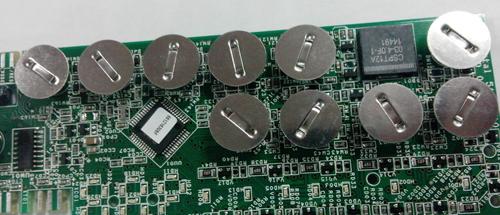
Capacitive touch sensing works because a conductive object, such as your finger, alters the electrostatic field near a sensor circuit. You place capacitive touch springs directly onto a printed circuit board to serve as extended electrodes. These metal coils project upward from the board surface. They detect your approach from multiple directions through the surrounding electric field.
The spring geometry determines how effectively the sensor reads your touch through control panel overlays. You can select specific design parameters to optimize performance:
|
Parameter |
Guidance |
|---|---|
|
Electrode shape |
Circular is optimal; rounded rectangular pads are acceptable; sharp points must be avoided. |
|
Electrode diameter |
8-15 mm, typical 12 mm; choose a larger diameter for a thick overlay. |
|
Adjacent key spacing |
At least 5 mm between adjacent keys. |
|
Spring installation height |
Greater than 5 mm. |
|
Spring diameter |
Not less than 10 mm. |
|
Spring shape |
Sensitivity order: metal strip-shaped > bell-shaped > straight barrel-shaped. |
|
Adjacent spring-key spacing |
At least 10 mm between adjacent spring keys. |
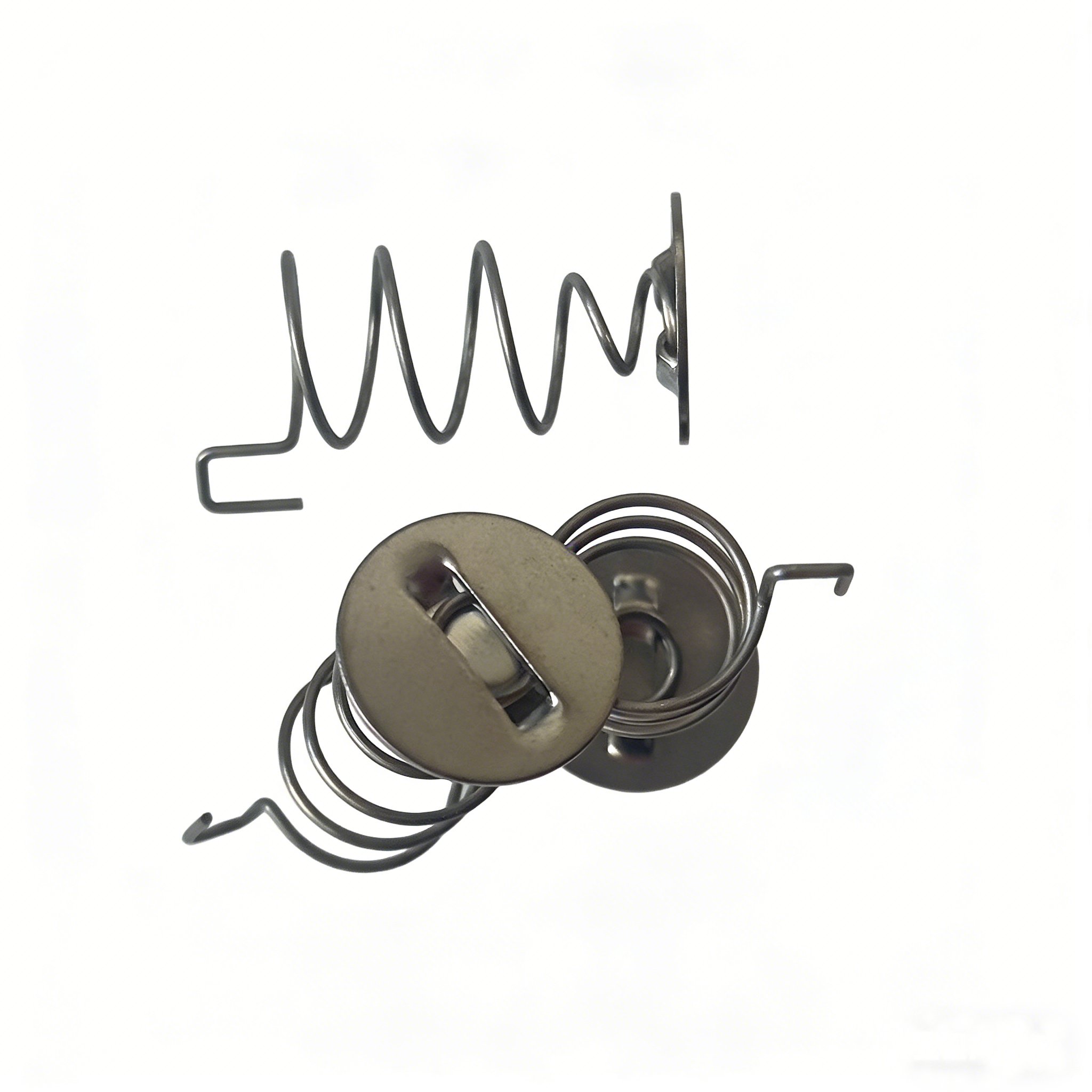
A circular metal-plate capacitive touch spring expands the top contact area. This expanded surface area increases total self-capacitance sensitivity. The larger surface enables your sensor to detect capacitance changes through thicker plastic or glass covers. Avoid sharp corners on your electrodes because sharp points concentrate electric field lines unevenly. Smooth, rounded shapes maintain uniform field lines across your entire touch panel.
According to Texas Instruments' CapTIvate Design Guide, a finger touch introduces a small capacitance change. This shift typically ranges from 100 femtofarads (0.1 picofarads) to 1 picofarad. For instance, a 1 picofarad capacitance shift can generate approximately 300 measurement counts in a system with a sensitivity near 3.3 femtofarads per count. Your touch controller monitors these count shifts to register user inputs instantly.
Air Gap Elimination and Spring Compression
Air acts as an unwanted insulator in electronic interfaces. Standard printed circuit boards leave small air gaps between flat sensing pads and upper glass panels. These dielectric air gaps weaken electrostatic fields and lower touch sensitivity.
Metal-plate capacitive touch springs solve this physical clearance issue completely. You align the coil beneath the target touch zone on your appliance panel. When you install the outer overlay, the panel physically depresses the flexible coil. Physical spring compression maintains firm, continuous mechanical contact against the inner surface of your overlay.
This continuous pressure eliminates air pockets between your board and the interface cover. The compressed spring provides a direct electrical contact path between the touch surface and the underlying sensor circuitry. Your finger touch alters the field around the coil whether you hover close or press firm. The internal sensor detects this precise capacitance change immediately. It then triggers the intended function on your smart appliance, such as activating capacitive touch buttons or adjusting temperature settings.
In modern smart home appliances, structural and assembly tolerances often create subtle alignment shifts during daily operational cycles. The physical resilience of the compressed coil absorbs these tolerance variations effortlessly while maintaining constant contact pressure against the overlay. This flexible spring assembly allows every capacitive switch inside your appliance control module to function reliably despite internal thermal expansion or mechanical vibration across long periods of heavy usage.
Key Advantages in Capacitive Touch Switch Designs
Modern smart home appliances demand durable user interfaces. You achieve superior structural stability by integrating Goodkey capacitive touch springs into control panels. Appliance manufacturers face constant challenges with manufacturing stack-up tolerances. Micro-variations during housing fabrication create uneven gaps between circuit boards and outer faceplates. Flexible spring electrodes extend upward from the circuit board surface to absorb these mechanical variations effortlessly. They maintain steady contact against the panel cover in appliances like microwaves, dishwashers, and smart lamps.
Tolerance Compensation and PCB Protrusion
Your electronic assemblies require stable electrical performance across diverse operating conditions. A capacitive touch switch panel performs efficiently across standard 9-24V DC voltage ranges. The metal coil protrudes directly from the circuit board surface to span variable clearance gaps. This height flexibility eliminates the need for strict housing tolerances during manufacturing. You save production costs while ensuring consistent physical connectivity across every touch control system.
Solid contact pressure ensures fast signal transmission whenever a user touches the interface. The spring flexes during assembly, which prevents mechanical stress on solder joints. You can evaluate how this technology compares to legacy input methods through several key operational factors:
|
Documented advantage |
Capacitive switch evidence |
Comparison to mechanical switches |
Relevance to smart home appliances |
|---|---|---|---|
|
Durability |
No moving parts; rated for millions of cycles without wear. |
Mechanical switches use a spring-loaded contact system that degrades with repeated actuation. |
Extends service life of smart controls and reduces replacements. |
|
Environmental protection |
Can be completely sealed against water, dust, and debris. |
Mechanical switches are more vulnerable to moisture and contaminants. |
Supports use in kitchens, bathrooms, and outdoor smart-home installations. |
|
User experience |
Silent, smooth touch operation without mechanical resistance. |
Mechanical switches require physical contact and provide tactile feedback. |
Fits sleek, modern smart thermostats, light switches, and security panels. |
|
Multi-touch input |
Can detect multiple touches at once. |
Mechanical switches need one switch per physical contact. |
Enables compact multi-function controls in home automation. |
|
Maintenance |
Virtually maintenance-free because no physical contacts degrade. |
Mechanical switches may require cleaning or replacement over time. |
Low-maintenance controls are practical for integrated smart-home systems. |
|
Smart-home suitability |
Already applied in home automation, smart lighting, thermostats, and security panels. |
Mechanical switches are not presented as smart-home oriented. |
Directly matches the queried smart-home appliance use case. |
Backlighting and Moisture Resistance
Visual clarity enhances user interaction on modern control interfaces. Engineers select center-hollow coil designs to optimize illumination pathways. You can mount a light-emitting diode directly beneath the open center of a circular metal-plate capacitive touch spring. Light shines upward through the hollow core without obstruction. This structural arrangement delivers uniform backlight distribution across individual capacitive touch buttons.
In humid environments, surface moisture often disrupts electronic interfaces. Metal-plate capacitive touch springs press firmly against sealed glass or plastic overlays. This complete mechanical contact eliminates air gaps where water vapor might collect. Contaminants remain entirely on the outer surface layer of the appliance. A solid-state capacitive switch keeps liquid away from internal electronic components. You protect sensitive sensor circuits from moisture damage on kitchen cooktops and washing machines.
Capacitive switch components operate silently without mechanical resistance. The absence of moving parts eliminates physical wear over long operational lifespans. Sealed front panels block grease, dust, and cleaning sprays effectively. Your appliance control modules retain high touch sensitivity and pristine visual appearance throughout years of continuous home usage.
Engineering Considerations for Smart Appliance Interfaces
Spring Geometry and Overlay Material Compatibility
You must select proper spring parameters to ensure seamless interface responsiveness. Overlay touch pad materials like glass, acrylic, and plastic alter electric field lines differently. Panel thickness also affects signal strength during operation. Goodkey custom spring manufacturing capabilities help you customize spring height, pitch, and coil profile for every smart home appliance application.
Your structural choices directly influence overall sensor performance. You adjust touch pad size and touch pad shape to match the dielectric properties of your chosen cover panel. Choosing a circular metal-plate capacitive touch spring maximizes the surface contact area against your overlay. Meanwhile, metal-plate capacitive touch springs provide steady physical support and maintain required compression across long operational periods. Proper touch pad design guarantees uniform touch distribution for all capacitive touch buttons on your control interface.
Microcontroller and Firmware Integration
Integrating spring sensors with smart home microcontrollers requires careful hardware routing and customized software integration. Modern microcontrollers like the ESP32 detect tiny capacitance changes during direct user contact. You must route clean traces on your circuit board to minimize parasitic noise and prevent unwanted baseline fluctuations.
You tune capacitive touch springs for optimal sensitivity across variable operating environments through effective firmware setup:
-
Adjust the
touchRead()threshold in software to balance sensitivity against false triggers caused by noise. -
Add a 50 ms debouncing delay after touch detection to confirm readings and reject rapid noise spikes.
-
Use proper grounding and shielding around sensor traces to stabilize touch signals against interference.
-
Account for changing environmental humidity levels during baseline capacitance calibration.
-
Increase the effective touch area of your spring and recalibrate thresholds after final assembly.
-
Optimize circuit board layouts to secure consistent readings across every capacitive switch interface.
Flexible capacitive touch springs bridge physical gaps between circuit boards and outer panels. These components eliminate air gaps effortlessly. You achieve instant signal responsiveness across every capacitive touch switch interface. Partnering with Goodkey delivers immense practical value for your control panel designs. Goodkey provides end-to-end service from initial design to automated production. You receive custom samples within one week. Goodkey supplies over 50 million touch buttons annually with strict quality inspection. Choosing tailored spring designs simplifies your circuit board assembly process. You enhance overall product longevity while offering an intuitive user experience. Modern smart home technology demands robust control solutions for lasting reliability.
FAQ
What is the primary purpose of capacitive touch springs in home appliances?
You use these springs to bridge physical air gaps between circuit boards and outer control panels. They compress during assembly to maintain direct contact against overlays. This firm connection eliminates insulating air pockets and improves touch sensitivity across modern interfaces.
How do you integrate LED backlighting with touch springs?
You can place a light-emitting diode directly beneath a circular metal-plate capacitive touch spring. Light shines upward through the open center of the hollow coil. This configuration provides bright, uniform backlighting across individual appliance buttons without obstructing electrical signals.
Why are spring electrodes better than traditional mechanical switches?
Spring electrodes contain no moving mechanical parts. They offer superior moisture resistance and withstand millions of touches without physical wear. You can completely seal a capacitive switch interface to protect internal circuit components from kitchen grease, water vapor, and dust accumulation.
How do metal-plate capacitive touch springs handle manufacturing tolerances?
Mechanical variations create uneven gaps inside appliance housings. Flexible metal-plate capacitive touch springs absorb these clearance differences by flexing during final assembly. Their spring tension maintains steady surface pressure, ensuring reliable touch detection despite subtle thermal expansion or mechanical vibration.